
Marketing AI that leaves a receipt for every draft it writes
Every generation is a saved run with its tokens, time and cost. Every draft lands in your content library, tagged. This page marks what is live and what is not.
Most marketing suites bolt a chat box onto the side. Here the AI tools are shared workspace records, and running one writes copy straight into the library your team already works from.
The honest limit: today's drafts come from a fast built-in engine, not a frontier model, and AI spend is measured but not yet capped.

Everything below is labelled with where it actually stands in HeadshotMarketing today — shipped, in progress, or on the roadmap.
AI-native by architecture, not bolted on
Four architectural choices that make AI a first-class part of HeadshotMarketing rather than a chat window on the side.

A shared tool library, not private prompts
Each tool carries its purpose, model and settings and is shared with the team, so a recipe that worked is reusable, not stuck in one chat.

Every run is saved, priced and searchable
Each generation records its input, output, tokens, time and cost, and who ran it. Failures are kept too, with the error and the time they burned.

The AI sees only what you can see
Console, assistant and outside agents all pass the same permission checks as the screens. There is no privileged AI shortcut into your data.

It works on your real campaigns
Campaigns, content, contacts, ads, influencers, events and SEO sit together, so a generated caption becomes a real draft and an audit a real report.
From intent to a governed action
Walk the path a request takes. Select any stage to see what happens there and what backs it.
Stage 1 of 5 · Context
Opens with your work already loaded
The console opens on your tools, your recent runs and this month's usage.
Your tool library, recent generations and monthly totals are on screen before you type. The tool you pick sets the input: a brief for copy, a page address for SEO. The assistant is reachable from every screen, but does not yet know which campaign is open.
What the AI in HeadshotMarketing actually does
Filter by delivery status, then open any capability for the detail and what backs it. No capability is listed as shipped without something in the product behind it.
Where the AI shows up
The places AI meets the work in HeadshotMarketing — and how far each one has actually got.
AI console
ShippedA two-pane writing room inside the marketing app: your tool library on the left, the generation panel on the right, and a history of runs under both.
- Each tool shows its category and uses this month; switched-off ones read Coming soon
- Input follows the tool: a brief for copy, a page address for SEO work
- Copy it or save it as a real draft; the footer shows the run's time and tokens
See it as a real scenario
Every AI capability above shows up in a concrete HeadshotMarketing story. Open one to read the full walk-through.
 Build a shared library of AI toolsSave the tools that work, run them on demand, and keep every run: a shared workshop instead of prompts scattered across chats.Read the story
 Draft every format from one consoleNine formats in the shape each channel needs: subject lines, ad copy, captions with hashtags, outlines, alt text and rewrites.Read the story
 See what your AI usage costTokens, time and cost on every run, monthly totals in the console, and an AI-made tag on the output. A spend ceiling is owed.Read the story
 Audit a live page, get the fix listLoad the real page, score it four ways, rank every finding with its fix, then draft the missing tags next door and run it again.Read the story
 Point your own agent at the stackAround 172 typed tools over campaigns, contacts, content, ads, SEO and analytics through one server, using your own permissions.Read the story
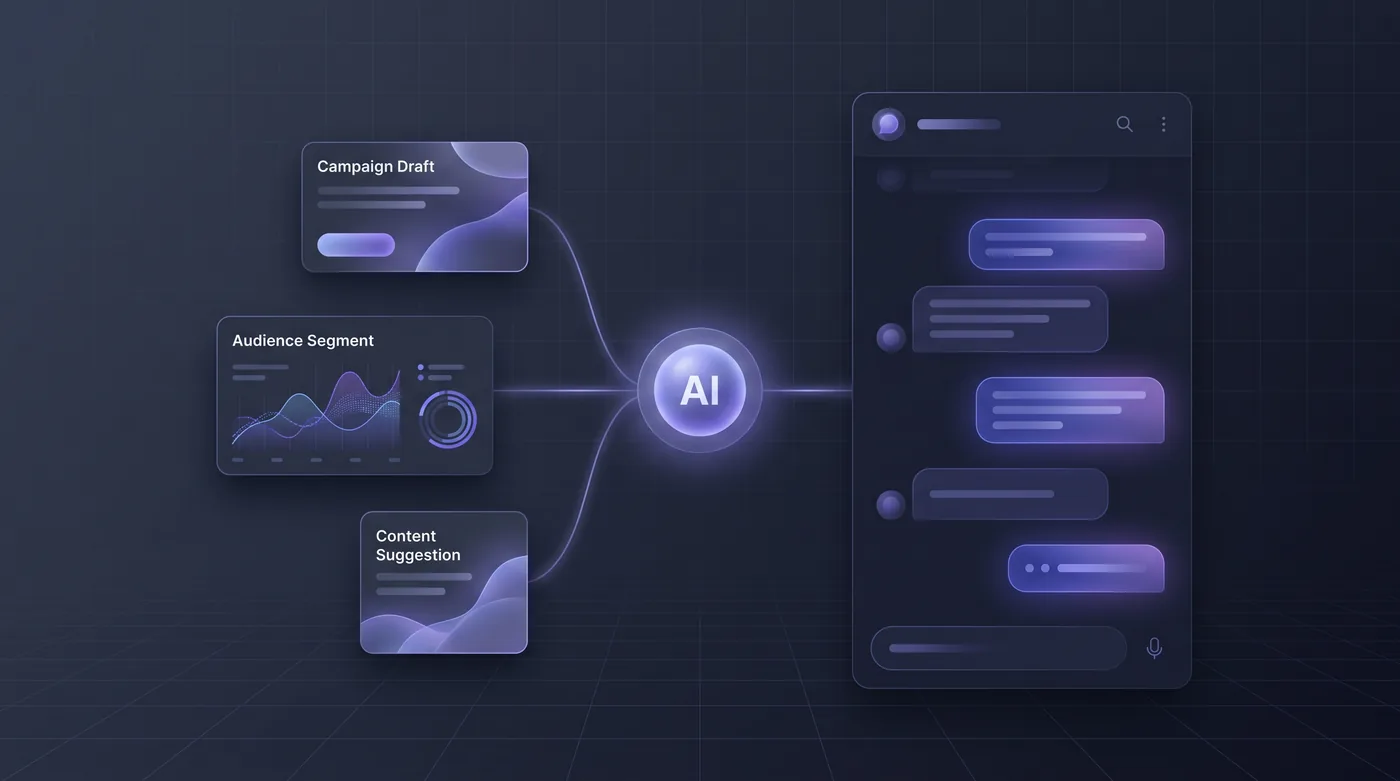 Ask an assistant on any screenA floating assistant for strategy, drafting, segmenting and reading your numbers, open from every page once you are signed in.Read the story
 Score leads and show the workingThe score, tiers and chart are live in the CRM today; the engine behind the number, and the explanation of a move, are planned.Read the story
 Let a nightly agent propose the shiftRead overnight performance, rank concrete budget moves with the numbers attached, and stop at a human gate. Designed, not running.Read the story
AI you can actually let near your data
An AI-native product has to be governable. Here is where HeadshotMarketing stands on each control — including the parts still being built.
AI data stays inside your workspace
Tools, runs, drafts and audits belong to your workspace and are kept apart in storage as well as in every lookup. Reaching across workspaces simply returns nothing found.
Permissions checked once, centrally
Every AI action declares what it may do and at what scope, and that is checked in one place before it runs. An agent can never reach what the person behind it could not.
Every run can be inspected later
Input, output, status, actor and timing are kept, failures included. Drafts carry an AI-made tag with the tool and model, so their origin is still answerable months on.
The one outbound fetch is fenced
Loading an address someone typed is a risk by default, so only public web addresses are loaded; loopback, private-range, link-local and internal hosts are refused first.
Cost measured per run, not yet capped
Tokens, duration and cost are stored on every run. What is missing is the ceiling: nothing refuses a runaway caller yet, the way campaign and contact limits already do.
Quality tests and delete confirmations
Two honest absences: no test set yet proves copy quality, and delete tools on the agent surface take no confirmation step. Gating deletes is the first piece of that work.
Models
HeadshotMarketing does not pick, pin or resell a model. Drafting runs on a fast built-in engine, private and repeatable, and plainly not a frontier model. Choosing a model name only records a label; it routes nowhere. Bring-your-own-key is not offered yet.
The honest answers
Not today, and we would rather say so than let you assume it. Drafting runs on a built-in engine that shapes output to the tool you picked and counts real tokens and cost. It is fast, private and repeatable, and it is not a frontier model. Swapping in an approved provider is the next step, not a claim.
Put HeadshotMarketing’s AI to work
Every generation is a saved run with its tokens, time and cost. Every draft lands in your content library, tagged. This page marks what is live and what is not.